
- Your cart is empty
- Continue Shopping
Gas Detector Saudi Arabia: Honeywell BW Clip vs GasAlertMax XT II Buyer’s Guide
- Personal Protective Equipment (PPE)
- Posted on
-
 by
Batul

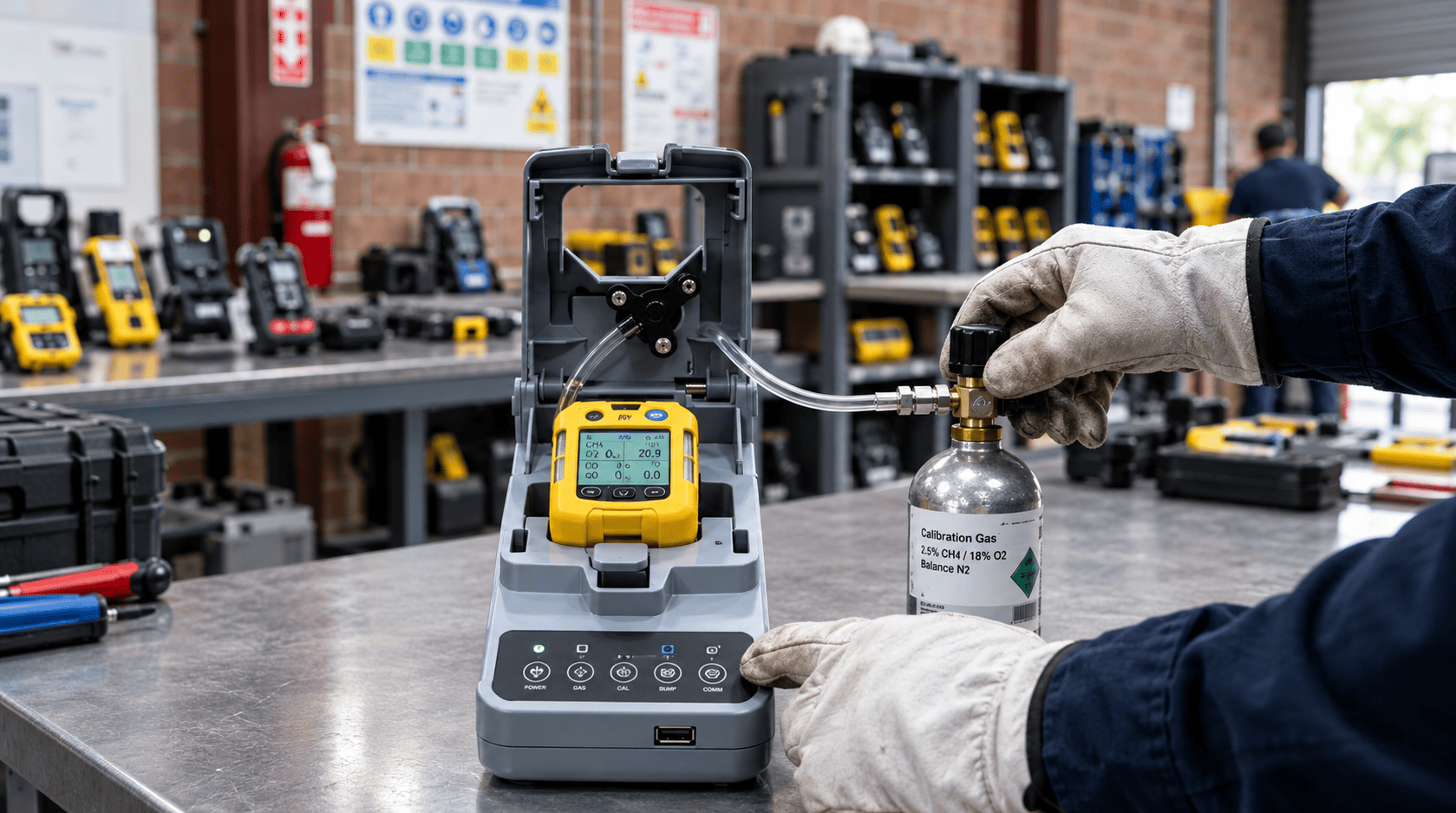
Choosing a gas detector in Saudi Arabia starts with your hazard, not the price. This guide covers the industries and cities that need gas detection, what SASO approvals and workplace rules mean for buyers, how two Honeywell BW detectors compare (the BW Clip single-gas detector and the GasAlertMax XT II four-gas detector), what they really cost to own, and the mistakes to avoid.
Short answer. Choose the BW Clip for one known gas and a maintenance-free personal alarm. Choose the XT II for confined-space entry, where oxygen, flammable gas, H₂S and CO all need checking and a built-in pump samples from outside. For either, confirm the model’s SASO explosive-atmosphere certification (IECEx or ATEX) before you buy.
Which Gases Are The Hazard?
| Gas | Typical Sources on Saudi Sites | Honeywell BW Option |
|---|---|---|
| H₂S | Oil and gas processing, refineries, sewers | BW Clip H₂S; XT II |
| CO | Engines, generators, boilers, welding, enclosed car parks | BW Clip CO (BWC2-M); XT II |
| O₂ | Tanks, vessels, vaults, manholes (deficiency or enrichment) | BW Clip O₂; XT II |
| %LEL | Hydrocarbon vapour in plants, tanks and maintenance | XT II |
| SO₂ | Refining and sulfur-handling processes | BW Clip SO₂ |
Industries And Cities Where Gas Detectors Are Used
Demand follows industry. This table shows typical use by city. It describes work types, not named customers.
| City | Typical Work | Main Hazards | Usual Fit |
|---|---|---|---|
| Riyadh | Construction, infrastructure, utilities, water | CO, confined spaces | BW Clip CO; XT II for entry teams |
| Jeddah | Port, water and desalination, coastal construction | Confined spaces, CO, sewer H₂S | XT II; BW Clip |
| Dammam, Al Khobar, Dhahran | Oil and gas operations, fabrication, turnarounds | H₂S, flammable vapour, low O₂ | XT II |
| Jubail | Petrochemicals, heavy industry, utilities | H₂S, %LEL, CO, SO₂ | XT II plus BW Clip |
| Yanbu | Refining, petrochemicals, port | H₂S, %LEL, CO | XT II plus BW Clip |
| Jazan | Refinery, industrial city, port | H₂S, SO₂, %LEL | XT II; BW Clip H₂S or SO₂ |
| Tabuk, NEOM, Red Sea coast | Construction, tourism and utility infrastructure at remote sites | Generator CO, confined spaces | BW Clip for crews; XT II for supervisors |
Projects And Work Packages That Need Gas Detection
Reporting in 2026 shows capital concentrating on Diriyah, Qiddiya, Red Sea Global and ROSHN, with Expo 2030 Riyadh and the 2034 FIFA World Cup setting fixed deadlines. Priorities and scope change, so check any project’s current status. The detector is tied to the work package, not the project name:
- Below-grade works: utility tunnels, sewer and stormwater lines, pump stations, manholes, vaults.
- Tanks and vessels: water and fuel tanks during commissioning, cleaning and maintenance.
- Hot work: welding and cutting in enclosed areas, which can produce CO and use up oxygen.
- Temporary plant: generators, compressors and forklifts running near enclosed spaces.
- Plant shutdowns: turnaround work in Jubail, Yanbu, Jazan and the Eastern Province.
1. Bump test
Sensors and alarmsrespond
2. Sample outside
Probe, tubing,built-in pump
3. Read gases
%LEL, O₂, H₂S, COlive display
4. Decide
Follow your permitand procedure
Saudi Rules And Approvals For Gas Detectors
General information, not legal advice. Requirements and certificate lists change, so confirm with the authorities, your client’s HSE team and your supplier.
SASO: IECEx or ATEX certification
The Saudi Standards, Metrology and Quality Organization (SASO) lists gas detectors and gas detection systems among products for potentially explosive atmospheres. It issues a conformity certificate based on the IECEx scheme or the European ATEX directive. SASO describes an ATEX certificate with a declaration of conformity, or an IECEx certificate of conformity with its test report. Industry notices state that an IECEx recognition requirement applied to gas detectors from 1 November 2021, and registration runs through SABER. Ask your supplier to confirm the current status for the exact model.
MHRSD and the Labor Law
The Ministry of Human Resources and Social Development (MHRSD) is the primary regulator of employer safety obligations, and GOSI provides occupational-injury insurance. Employers are expected to identify, assess and control hazards, so a detector is normally specified by your risk assessment, not by a rule naming a model.
High-risk professions regulation
Law-firm reporting in 2026 described a regulation, reported to take effect on 3 July 2026, that asks employers to classify high-risk roles. Its examples include confined-space work, welding and cutting, with requirements for medical fitness, training and competence. If your teams enter tanks, vaults or manholes, a bump-tested detector supports that programme. Confirm the details on official ministry sources.
Reading the Approval Marks
| Mark | Plain Meaning |
|---|---|
| cULus Class I, Div. 1, Gr. A–D | North American approval for areas that may contain flammable gas |
| ATEX II 1G Ex ia IIC T4 Ga | European approval: intrinsically safe, gas group IIC, suitable for Zone 0, surface temperature class T4 (135 °C) |
| IECEx Ex ia IIC T4 Ga | International equivalent, the basis of the SASO certificate on the IECEx route |
Honeywell lists the BW Clip with cULus, ATEX and IECEx. For the XT II, the datasheet verified shows cULus and ATEX, so request the IECEx certificate if your site needs that route.
Why Is Gas Detector Testing Important in Saudi Arabia?

BW Clip (BWC2-M)
1 gas · 92 g · no calibration

GasAlertMax XT II
4 gases · built-in pump · ~328 g
Honeywell BW Clip 2-year CO detector (BWC2-M)
A personal detector you switch on and wear. For its rated life there is no calibration, sensor change or charging. It sounds a 95 dB alarm with a wide-angle flash and vibration, and self-tests every 24 hours.
| Specification | BWC2-M |
|---|---|
| Range and Default Alarms | CO 0–300 ppm; 35 ppm low, 200 ppm high (adjustable) |
| Service Life | 2 years from activation; hibernation can extend to 3 years total, limited to 24 months of operation. Shelf life before activation: 1 year (6 months for O₂) |
| Size, Weight | 4.1 × 5.0 × 8.7 cm, 92 g |
| Operating Temperature (CO) | −30 °C to +50 °C |
| Protection, Log | IP66/67; 35 most recent events |
| Fleet Management | IntelliDoX (tests up to five units at once) |
| Approvals | cULus Class I Div. 1 and Zone 0; ATEX II 1G Ex ia IIC T4 Ga; IECEx; CE; ABS |
| Part Numbers | BWC2-M; black BWC2-M-B; 50-pack BWC2-M-B50 |
The family also covers H₂S (0–100 ppm, defaults 10/15 ppm), O₂ (0–25% vol, 19.5/23.5%) and SO₂ (0–100 ppm, 5/10 ppm). It monitors one gas, and Honeywell lists its use in atmospheres with no more than 21% oxygen. For a live reading and calibration, ask about the BW Clip Real Time version.
Honeywell GasAlertMax XT II (XT-XWHM-Y-NA)
Monitors %LEL, O₂, H₂S and CO together. The SmartSample pump draws air through a probe and tubing, from up to 75 ft (23 m) per Honeywell, so a tank or manhole can be tested before entry.
| Gas | Range | Default Low / High |
|---|---|---|
| H₂S | 0–200 ppm | 10 / 15 ppm |
| CO | 0–1000 ppm | 35 / 200 ppm |
| O₂ | 0–30.0% | 19.5 / 23.5% |
| Combustible | 0–100% LEL | 10 / 20% LEL |
| Specification | XT II |
|---|---|
| Alarms | 95 dB; visual and vibrating; low, high, STEL, TWA |
| Size, Weight | 13.1 × 7.0 × 5.2 cm, about 328 g |
| Operating Temperature | −20 °C to +50 °C |
| Battery | Rechargeable; about 13 h at 0 °C, about 8 h at −20 °C; recharge about 6 h |
| Fleet Management | MicroDock II |
| Approvals (Datasheet) | cULus Class I Div. 1 Gr. A–D; ATEX II 1 G Ga Ex ia IIC T4 |
| Part Numbers | XT-XWHM-Y-NA (yellow); XT-XWHM-B-NA (black) |
Note: Default alarm values are typical. Confirm them on the unit you receive.
Summer heat. Both detectors have a +50 °C maximum operating temperature. Summer air in parts of Saudi Arabia can approach that range, and equipment in direct sun or a closed vehicle runs hotter than the air. Store detectors in shade and follow the Honeywell manual.
Which Detector For Which Job?
| Job | Suggested Detector |
|---|---|
| Warehouse with forklifts, boiler room, loading bay | BW Clip CO |
| H₂S-only area, such as a sour-gas wellsite walkway | BW Clip H₂S |
| Sewer or pump-station entry | XT II (pre-entry sampling) |
| Refinery tank entry during a turnaround | XT II for the entry team; BW Clip H₂S for the wider crew |
| Car-park or tunnel fit-out with generators | BW Clip CO for crews; XT II for sealed areas |
Note: These are starting points. Your hazard assessment makes the final choice.
Popular Portable Gas Detectors Used in Industrial Applications

Honeywell BW MicroClip XL
The Honeywell BW MicroClip XL is a compact portable multi-gas detector designed for personal monitoring in industrial environments. Its lightweight design supports everyday use, while the installed sensors determine which gas hazards it can detect. Confirm the configuration before selecting it for a project.
Compact portable design
Multiple gas monitoring
Alarm function checks
Routine maintenance
Best for in Saudi Arabia: Industrial maintenance teams, oil and gas operations, and contractors conducting confined-space activities where the selected sensor configuration meets site requirements.

Dräger X-am 2500
The Dräger X-am 2500 is a portable gas detector designed for personal monitoring in industrial applications. Its suitability depends on the installed sensors, required gases and workplace conditions. Regular functional testing and calibration help ensure the instrument is ready for use.
Maintenance records
Calibration procedures
Sensor configuration checks
Portable gas monitoring
Best for in Saudi Arabia: Industrial facilities, plant maintenance teams and contractors carrying out atmospheric monitoring where the detector configuration meets the site’s gas detection requirements.

MSA ALTAIR 5X
The MSA ALTAIR 5X is a portable gas detector available in configurations for different monitoring requirements. Before purchasing, confirm the gases to be measured, sensor ranges and applicable calibration procedures. Regular inspection and appropriate technical support help maintain reliable operation.
Inspection and servicing
Calibration requirements
Configurable gas sensors
Portable gas monitoring
Best for in Saudi Arabia: Industrial maintenance contractors, oil and gas operations and other workplaces requiring portable gas monitoring with a configuration suited to the identified hazards.
Beyond the models discussed above, AED Arabia features additional gas detection options, including the MSA Altair 4XR, Dräger X-am 2800, Dräger Pac 6000 and MSA ALTAIR 2X. These detectors serve different monitoring needs depending on the gases involved, sensor configuration and workplace conditions.
Gas Detector Comparison: Which Model Should You Choose?
| Specification | Honeywell BW MicroClip XL | Dräger X-am 2500 | MSA ALTAIR 5X |
|---|---|---|---|
| Detector type | Portable multigas detector | Portable multigas detector | Portable multigas detector |
| Gas capacity | Up to 4 gases | Up to 4 gases | Up to 5 gases, depending on configuration |
| Typical applications | Personal monitoring | Personal monitoring and atmospheric testing | Personal monitoring and broader gas-monitoring requirements |
| Sampling options | Confirm model and accessories | Optional external pump | Confirm model and accessories |
| Testing equipment | IntelliDoX-compatible | Dräger X-dock and compatible test equipment | Applicable MSA test equipment |
| Calibration interval | Check the applicable manual | Follow the installed sensors’ instructions; technical documentation recommends six-month adjustment | Check the applicable manual and sensor configuration |
Where Gas Detector Testing Matters Across Saudi Arabia’s Major Projects and Industries
Saudi Arabia’s oil and gas developments, petrochemical facilities, industrial cities and infrastructure projects create a wide range of gas-monitoring requirements. Portable gas detectors can help workers identify hazardous atmospheres, but their effectiveness depends on correct sensor selection, regular bump testing, calibration and maintenance.
Oil and Gas: Saudi Aramco Operations and Gas Projects
Saudi Arabia’s oil and gas sector includes production facilities, gas processing plants, pipelines and maintenance operations. Projects such as Jafurah and Tanajib highlight the scale of the Kingdom’s gas development. Depending on the task, workers may need to monitor hazards such as hydrogen sulphide (H₂S), carbon monoxide (CO), oxygen deficiency and combustible gases.
Portable detectors such as the Honeywell BW MicroClip XL and Dräger X-am 2500 may be suitable when their installed sensors match the identified hazards. Before deployment, confirm the detector’s condition, perform the required functional test and follow the site’s calibration procedure.
Petrochemical Plants and Refineries: Jubail and Yanbu
Petrochemical complexes and refineries involve processing operations, chemical handling, equipment maintenance and shutdown activities. Potential atmospheric hazards depend on the process and work area, making correct detector configuration essential.
The Industrial Scientific Ventis MX4 and MSA ALTAIR 5X are examples of portable multi-gas detectors that may be considered for suitable applications. Maintenance teams should verify the required gases, check alarm functions and maintain records of bump tests, calibration results and corrective actions.
Jafurah and Tanajib: Gas Processing and Field Operations
Gas field development and processing operations can involve equipment installation, pipeline work, inspections and maintenance. Workers may encounter combustible gases or toxic gases depending on the process and location.
Before work begins, teams should confirm which gases need monitoring and select an appropriately configured detector. A functional test helps confirm that gas reaches the sensors and that the alarms respond. Calibration should be completed according to the manufacturer’s instructions and applicable site requirements.
Industrial Shutdowns, Turnarounds and Commissioning
During shutdowns, turnarounds and commissioning, several contractor teams may use portable detectors across different work areas. Equipment may be moved between tasks, increasing the importance of consistent testing and maintenance procedures.
A clear process should cover pre-use inspections, required bump tests, calibration status, failed-test procedures and record keeping. Detectors that fail a required check should be taken out of service until the issue is resolved according to the applicable procedure.
Mining and Mineral Processing
Mining and mineral-processing operations can involve combustible gases, oxygen-related hazards and other atmospheric risks depending on the site and activity. Maintenance work in enclosed areas or around process equipment may require additional gas monitoring.
Portable detectors should be selected according to the hazards identified by the site risk assessment. Workers should check sensor suitability, battery condition and alarm operation, while maintenance teams should keep calibration records up to date.
Desalination, Water Treatment and Utilities
Desalination plants, wastewater facilities and industrial utilities may handle treatment chemicals or use gases in specific processes. The hazards vary by installation, so the detector must be selected for the chemicals and atmospheric conditions present.
Where gas monitoring is required, teams should verify the installed sensors and use compatible test gas and calibration accessories. Any detector exposed to harsh conditions should be inspected according to the manufacturer’s guidance before being returned to service.
Industrial Construction and Infrastructure Projects
Construction and infrastructure work can involve excavation, welding, coatings, plant-room installation and work in enclosed spaces. Gas monitoring may be necessary when the risk assessment identifies potential atmospheric hazards, including oxygen deficiency or combustible gases.
Contractors should confirm that each detector is suitable for the task and that testing requirements are followed before deployment. A shared maintenance process also helps teams track calibration dates, identify failed instruments and avoid using equipment that is not ready for service.
Confined-Space Entry and High-Risk Maintenance
Tanks, vessels, pits and other enclosed spaces can contain hazardous atmospheres. Before entry, the responsible team should follow the site’s confined-space procedure, including the required atmospheric testing, monitoring and emergency arrangements.
A suitable portable detector must cover the hazards identified for the space. Workers should verify that the instrument passes the required functional checks and is within its calibration period. Bump testing does not replace calibration, atmospheric testing or the site’s entry requirements.
EPC Contractors and Industrial Maintenance Teams
Engineering, procurement and construction (EPC) contractors often coordinate equipment across multiple work packages and subcontractors. Documented testing helps teams confirm that detectors are inspected and maintained before being assigned to workers.
A practical maintenance record should include the instrument identification, test date, result, calibration status, faults identified and corrective action taken. Employers should also follow the project’s HSE requirements and the detector manufacturer’s instructions.
Common Gas Detector Calibration Mistakes to Avoid
| Common mistake | Why it matters |
|---|---|
| Treating a bump test as a calibration | A bump test does not establish full measurement accuracy |
| Using the wrong test gas | The test may not be valid for the installed sensor |
| Ignoring failed tests | The instrument may not be suitable for safety-critical use |
| Applying one interval to every model | Manufacturers may specify different testing intervals |
Gas Detector Testing and Calibration Checklist for Industrial Teams in Saudi Arabia
Before a portable gas detector is deployed, the responsible team should follow the applicable manufacturer instructions and site HSE procedure.
- Visual inspection: Check the housing, display, sensors, gas inlet, filters, battery and accessories for visible damage or obstruction.
- Bump testing: Use compatible test gas and the approved procedure to confirm the required sensor responses and alarms.
- Calibration checks: Confirm that readings are within the manufacturer’s specified tolerances using the prescribed method.
- Full calibration: Adjust the instrument when required, following the manufacturer’s procedure.
- Failed test response: Remove an instrument that fails a required check from service until it has been investigated, corrected and successfully tested as required.
- Record keeping: Document the detector identification, test date, result, calibration status, faults and corrective action.
- Before confined-space entry: Follow the site procedure for atmospheric testing, monitoring, ventilation and emergency arrangements.
Bump testing, calibration checks and full calibration serve different purposes. A successful bump test does not establish measurement accuracy, and calibration does not replace any separate functional checks required by the manufacturer or site procedure.
Frequently Asked Questions
How often should a gas detector be calibrated?
There is no single interval suitable for every detector and sensor. Follow the applicable manufacturer’s instructions and any stricter site requirements. Establish the schedule for the exact instrument configuration and document it.
Is a bump test the same as calibration?
No. A bump test checks whether the detector responds to test gas and whether its required alarms operate. Calibration checks the instrument’s response against a known concentration and adjusts it when required.
Should a gas detector be bump tested before use?
Follow the manufacturer’s guidance and site procedure. Many portable gas detection programmes require a bump test before each day’s use. Additional checks may be required after an incident or when the detector’s reliability is in doubt.
What should I do if my gas detector fails a bump test?
Remove it from service and follow the manufacturer’s troubleshooting procedure. Calibrate or repair the detector as required, then perform the specified checks before returning it to service.
Can gas detectors be calibrated on site?
Yes, where the company has the appropriate equipment, calibration gases, trained personnel and approved procedures. The method must be suitable for the detector and its sensors.
Can extreme heat affect a gas detector?
Exposure outside the manufacturer’s permitted temperature limits may affect equipment performance. Store and operate the instrument within its specified limits, and inspect it after suspected heat damage.
Does AED Arabia supply gas detectors for Saudi Arabia?
AED Arabia can assist with enquiries for gas detection equipment, subject to current stock, model availability and delivery arrangements. Contact the team with your required model, sensor configuration, quantity and delivery location to request a quotation.
Need Portable Gas Detectors for Industrial Applications in Saudi Arabia?
Looking for portable gas detectors for oil and gas operations, refineries, petrochemical plants, industrial maintenance or confined-space work in Saudi Arabia? Share your required gases, preferred manufacturer, quantity and delivery location so we can help you identify suitable options for your application.
Final Word
Choosing the right gas detector is essential for maintaining workplace safety across Saudi Arabia’s industrial sectors. The Honeywell BW MicroClip XL, Dräger X-am 2500, Industrial Scientific Ventis MX4 and MSA ALTAIR 5X offer portable gas-monitoring options for different applications, depending on their sensor configurations. Before selecting a detector, assess the gases present, verify sensor compatibility and follow the manufacturer’s instructions for bump testing, calibration and maintenance. Keep accurate testing records, remove instruments that fail required checks from service, and ensure detectors are ready before deployment.
Reviewed by the AED Arabia Equipment Team
We supply 3M respirators, cartridges and filters across Saudi Arabia. This guide is for general information and is not occupational hygiene, medical or legal advice. Confirm current SASO and project requirements before purchasing.
